


Using AI Agents in DevOps to Automate CI/CD, Incident Response, & Root Cause Analysis
Key Takeaways
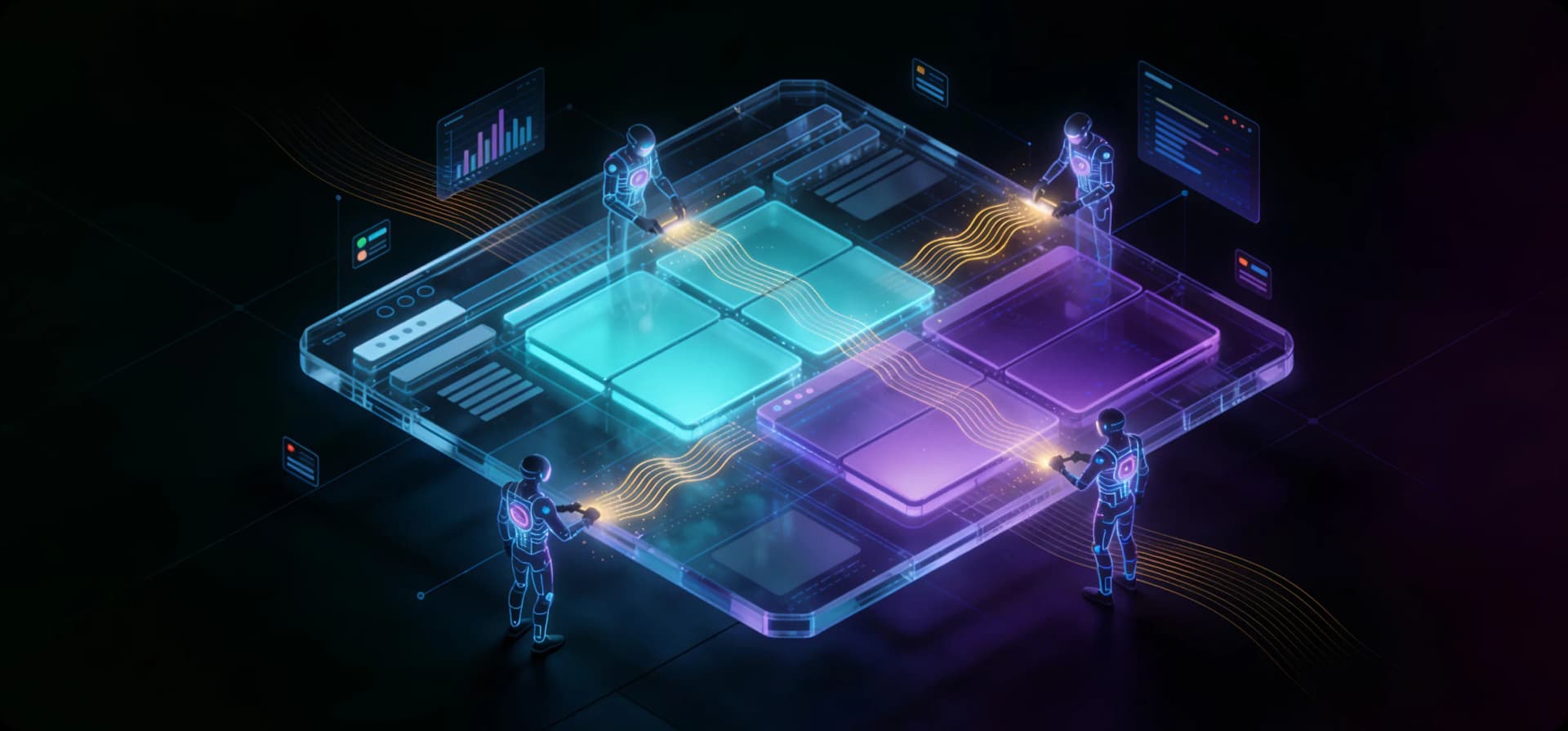
DevOps is moving beyond pipeline automation into a model where AI agents monitor, decide, and act across the software delivery lifecycle. While observability and AIOps tools have improved detection, they rarely close the loop between signal and action. AI agents fill this gap by acting as an orchestration layer that connects systems, interprets signals, and executes workflows. The value is measurable: lower MTTR, reduced alert fatigue, and more reliable deployments. However, autonomy must be governed carefully, especially in regulated environments.
The On-Call Crisis Breaking Engineering Organizations
At 2:47 AM, a payment processing system at a digital lending firm begins to fail. An engineer is paged, opens multiple dashboards, and begins working through hundreds of alerts. After nearly 40 minutes of investigation, the issue is traced back to a configuration error introduced earlier in the day.
This scenario is not unusual, it is systemic for most engineering organizations.
Across modern engineering environments, incident response has become increasingly difficult not because of inadequate tooling, but because of scale. Distributed systems generate an overwhelming volume of telemetry. Logs, metrics, and traces flow continuously, often at rates that far exceed what any human team can process effectively. In a typical microservices architecture spanning multiple cloud regions, millions of events may be generated every hour.
The issue is not engineer productivity. It is a structural breakdown in the signal-to-noise ratio.
Research from the DORA consistently shows that performance gaps between high and low performing teams are closely tied to mean time to resolution (MTTR). However, improvements are increasingly limited by the human response loop, where alert fatigue, fragmented tooling, and manual triage slow down decision-making.
AI DevOps automation is emerging as a response to this constraint, not as faster tooling, but as a fundamentally different execution model.
The Limits of Current AIOps & Observability Tooling
Over the past decade, organizations have made significant investments in observability and AIOps platforms. Tools such as Prometheus, Datadog, ELK Stack, and PagerDuty provide deep visibility into system behavior. They excel at detecting anomalies and surfacing alerts, often with increasing levels of sophistication.
However, these tools stop short of taking action.
An alert still requires an engineer to interpret it, investigate context, identify root cause, and execute remediation. Even advanced AIOps platforms, as defined by Gartner, remain primarily analytical. They cluster events and suggest correlations, but execution remains human-driven.
The result is a persistent gap:
Observability systems detect. Humans decide. Humans act.
This model does not scale. As PagerDuty highlights, alert fatigue and excessive noise are among the most common challenges in engineering teams today.
What is missing is not more data, but a layer capable of translating signals into action.
A Framework for Understanding the Shift: The 3 Layers of DevOps Execution
To understand where AI agents fit, it is useful to break DevOps execution into three layers:
| Layer | Primary Function | Traditional Tooling | AI Agent Contribution |
|---|---|---|---|
| Task Automation | Execute pipelines and scripts | Jenkins, GitHub Actions, Terraform | Smarter execution, adaptive pipelines |
| Decision Intelligence | Detect anomalies and risks | Prometheus, Datadog, ELK | Prediction, correlation, risk scoring |
| Workflow Orchestration | Coordinate actions across systems | Manual runbooks, PagerDuty | Autonomous workflows, self-healing systems |
Most organizations have matured in the first two layers. Pipeline automation is well established, and observability systems provide deep insights. However, the third layer—workflow orchestration—remains heavily dependent on human intervention.
AI agents operate primarily in this orchestration layer.
Rather than replacing existing tools, they connect them. They interpret signals from across systems and translate them into coordinated actions across CI/CD pipelines, infrastructure, and incident management platforms.

xLoop Insight: From Visibility to Execution
At xLoop, we see a consistent pattern across financial services engineering teams: organizations have strong observability foundations but struggle to operationalize them.
The bottleneck lies in decision-making under pressure.
AI SRE agents fundamentally change this dynamic by acting as an execution layer between signal and response. They do not replace existing tools; they make them actionable. This shift allows teams to move from reactive incident handling to structured, automated operations built on real-time system understanding.
AI SRE Architecture: How AI DevOps Automation Works
An AI SRE agent is an autonomous system that monitors production environments, correlates signals, identifies root causes, and executes remediation actions within defined guardrails.
Its operation can be understood through a continuous loop.
First, it monitors telemetry from multiple sources, including metrics, logs, and traces. Then, it correlates signals across systems, connecting anomalies into a unified picture. Next, it diagnoses the issue by comparing current conditions with historical incidents and recent changes. Finally, it initiates remediation, either autonomously or by presenting engineers with structured recommendations.
This closes the gap between observability and action—a challenge frequently highlighted by the CNCF, within the cloud-native ecosystem where growing system complexity requires teams not only to collect observability data but also to accelerate root-cause analysis and operational response.
CI/CD Pipeline Automation: From Execution to Intelligence
Traditional CI/CD pipelines are deterministic. They execute predefined steps—build, test, deploy—without awareness of context.
AI DevOps automation introduces decision-making into this flow.
By analyzing code changes, historical defect patterns, and system conditions, AI agents can assess the risk of a deployment. This enables dynamic adjustments, such as prioritizing high-risk scenarios or optimizing lower-risk ones.
Instead of running full regression suites on every commit, agents can selectively execute tests based on relevance. Deployment decisions can incorporate real-time signals, such as system health or error budgets, rather than relying solely on pass/fail checks. If conditions are unfavorable, deployments can be paused or reconfigured.
This transforms CI/CD from a static pipeline into an adaptive system.
Incident Response: From Manual Triage to Autonomous Resolution
In traditional environments, incident response is reactive and human-driven. Engineers are paged, investigate data, and execute fixes under pressure.
AI-driven incident response changes this model entirely.
An AI agent can detect anomalies, correlate signals across logs, metrics, and traces, identify the likely cause, and initiate remediation actions such as rolling back a faulty deployment. In many cases, this process completes before an engineer is even notified.
| Metric | Traditional On-Call | AI SRE Agent |
|---|---|---|
| Detection Time | Minutes | Seconds |
| Root Cause Analysis | 30–90 mins | 1–3 mins |
| Remediation | Manual | Automated / guided |
| Reporting | Manual | Auto-generated |
This directly addresses the operational challenges identified in PagerDuty research, where alert fatigue and delayed resolution remain persistent barriers to efficiency.
Root Cause Analysis in Distributed Systems
Root cause analysis in modern systems is inherently complex. Failures rarely originate from a single source and often cascade across services.
AI agents simplify this by combining multiple dimensions of analysis. They map dependencies between services, analyze log patterns, correlate recent changes from CI/CD pipelines, and compare current issues with historical incidents.
The result is not just an alert, but a structured explanation supported by evidence. This improves both speed and reliability while maintaining auditability—an important requirement in regulated industries.
Runbooks: From Documentation to Execution
Traditional runbooks are static documents. They rely on engineers to interpret and execute instructions, often under time pressure.
AI agents transform runbooks into executable workflows. They can interpret procedural logic, map steps to system actions, and execute them in sequence, adapting in real time. If unexpected conditions arise, they pause and escalate with full context.
This transition from documentation to execution significantly improves consistency and reduces response time.
Guardrails: The Boundaries of Autonomous Systems
While autonomy provides clear benefits, it must be carefully managed. AI agents should operate within well-defined boundaries to ensure safety and compliance.
Actions such as database schema changes, access to sensitive customer data, or production promotions should always require human approval. This aligns with core Site Reliability Engineering (SRE) principles, which emphasize managing risk maintaining reliability and balancing the pace of change against the potential impact on service stability. Google’s SRE framework specifically highlights the importance of risk management, error budgets, controlled releases and operational safeguards when introducing changes into production systems.
AI systems should enhance control, not replace it.
Conclusion: From Reactive Systems to Intelligent Operations
The evolution of DevOps is moving toward systems that not only observe but act.
AI DevOps automation introduces a new execution layer that connects detection, decision-making, and action. By reducing noise, accelerating response, and enabling intelligent workflows, AI agents allow engineering teams to shift from reactive incident management to proactive system optimization.
Adoption should begin with a focused pilot—one service, one alert category, and one automated action—and expand progressively. This ensures that organizations build trust while maintaining control.
As systems continue to scale, this shift is not optional. It is foundational to how modern software operations will function.

Start With a Scoped AI SRE Pilot
We help financial services teams deploy AI SRE agents, starting with a focused systems audit and a single, high-impact use case
FAQs
Frequently Asked Questions

Table of Contents
Newsletter Signup
Tomorrow's Tech & Leadership Insights in
Your Inbox
Discover New Ideas
7 AI Use Cases South African Enterprises Are Investing In
Agentic AI in Wealth Management: Building Self-Optimising Investment Portfolios
Is Your AI Actually Secure? What Enterprise Leaders Need to Know in 2026

Knowledge Hub